
GENERAL INFORMATION · VISA DOCUMENTS
U.S. visa photo standards: what the State Department requires
Visa photographs are identity records with detailed federal standards. The basic portrait rules are broadly shared, but the way a photo is submitted differs among nonimmigrant, immigrant, and Diversity Visa processes.
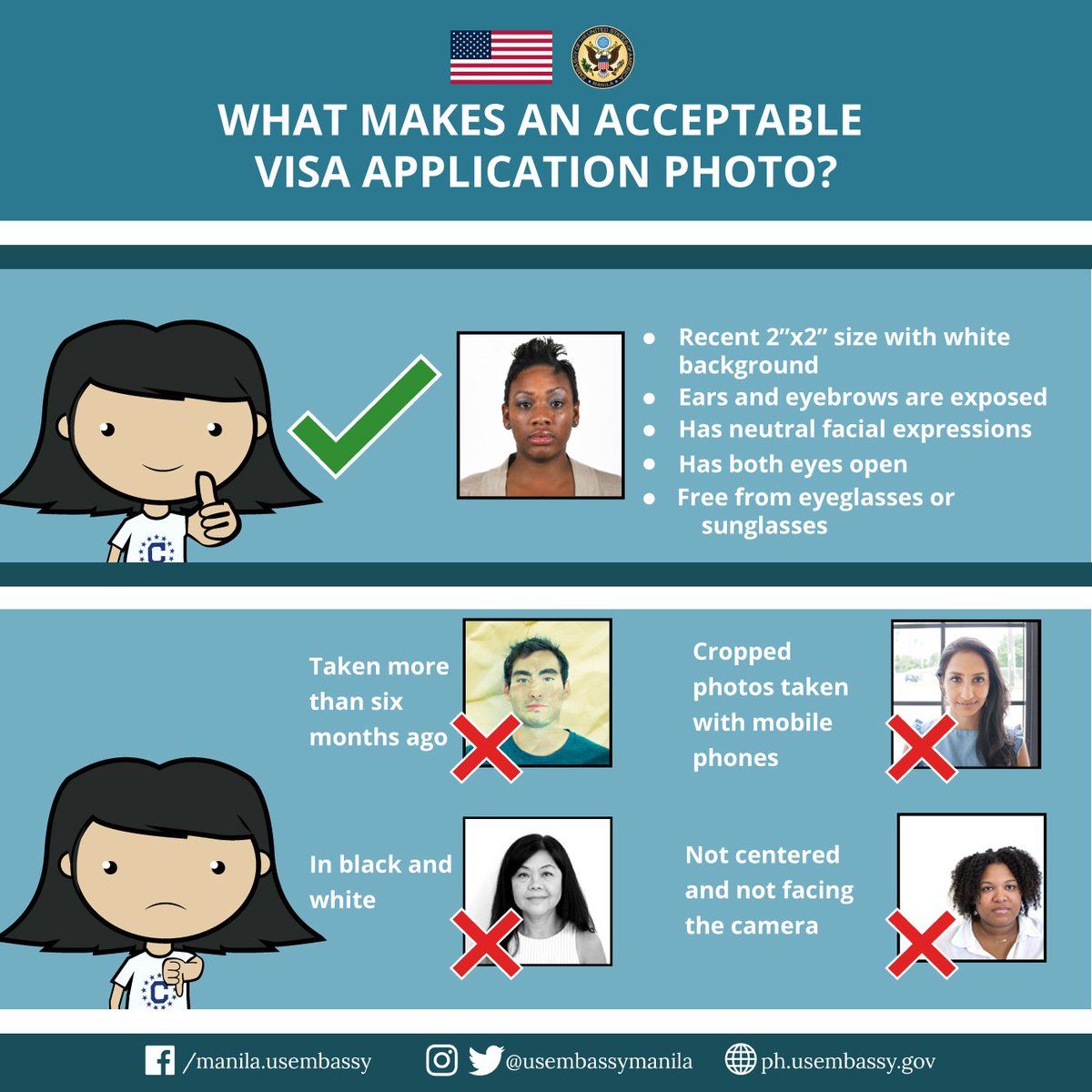
Official U.S. Embassy in the Philippines media, published April 26, 2018. The realistic portrait examples illustrate visa-photo standards. They do not depict a 2026 applicant, interview, approval, refusal, or visa decision. Original official media ↗
The core portrait standards
State requires a color image taken within the previous six months, against a plain white or off-white background. The person must face the camera directly with a neutral expression and both eyes open. The head must measure between 1 inch and 1⅜ inches from chin to top of head, or occupy 50% to 69% of the image height.
What may obscure the face
New visa photos generally may not include eyeglasses. State lists a narrow medical exception requiring a signed medical statement, and even then the frames, glare, shadows, or refraction may not obscure the eyes. Religious head coverings worn daily may be present, but the full face must remain visible and the covering may not cast facial shadows. Headphones and similar devices are not accepted.
Submission formats are not identical
DS-160 and DS-1648 nonimmigrant applications generally prompt the applicant to upload a digital image; some posts also require a printed photograph at interview. DS-260 immigrant-visa applicants must provide two identical 2-by-2-inch photographs at the interview. Diversity Visa entrants upload a square JPEG that is 600 by 600 pixels and no more than 240 kilobytes; selectees later bring two printed photographs.
The federal photo tool has a limited purpose
The State Department’s free photo tool can crop an image to the required square size. State expressly says the tool does not test image quality or guarantee acceptance. A State Department employee makes the acceptance decision.
Primary federal sources
- State Department: Photo Requirements ↗ — current general standards and category-specific formats.
- State Department: Photo Examples ↗ — official acceptable and unacceptable examples.
Corrections: No corrections have been made. We update material corrections transparently and revise the verification date.