
GENERAL INFORMATION · FEDERAL COURTS
The Alien Terrorist Removal Court is separate from immigration court
The similar words can be misleading: the Alien Terrorist Removal Court is a specialized federal court created by Congress, while immigration courts are administrative tribunals inside the Justice Department.
A narrow court created by Congress
The court's official website says Congress created the Alien Terrorist Removal Court in 1996. Its statutory task is to review federal applications seeking removal of people the government alleges meet the law's definition of an alien terrorist. It is not a general forum for visa petitions, citizenship applications, family sponsorship, asylum interviews, or routine removal cases.
Five Article III judges
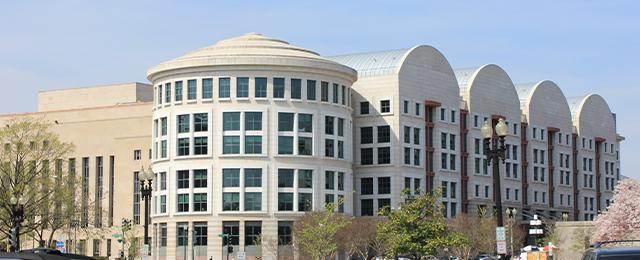
The ATRC consists of five U.S. district judges designated by the Chief Justice. They remain Article III judges. The court's official location is the E. Barrett Prettyman U.S. Courthouse at 333 Constitution Avenue NW in Washington, D.C.
By contrast, the Executive Office for Immigration Review operates immigration courts and the Board of Immigration Appeals within the Justice Department. Immigration judges are administrative adjudicators, not Article III district judges. Calling both bodies “immigration court” erases an important institutional difference.
Evidence, counsel, and review
Title 8, sections 1531 through 1537, establishes the court's procedures. The statute allows classified information in specified circumstances, provides for appointed counsel when statutory conditions are met, and permits review in the U.S. Court of Appeals for the District of Columbia Circuit. These are features of this specialized statutory process, not a summary of ordinary EOIR procedure.
Why the distinction matters
An ATRC order should not be presented as a BIA precedent, an immigration-judge decision, an ICE arrest total, or a CBP port-of-entry action. The bodies may interact with executive agencies, but their records answer different questions and cannot be combined into one enforcement statistic.
Primary sources
- Alien Terrorist Removal Court official overview
- 8 U.S.C. §§ 1531–1537, House Office of the Law Revision Counsel
- EOIR overview of immigration courts
Corrections: We separate the ATRC from EOIR and label the scope of each federal source. Send correction requests through the contact information in our source and corrections directory.
Legal information, not legal advice. This is a general institutional overview. It does not interpret evidence, assess a person's status, or advise anyone about a proceeding, deadline, appeal, or defense.