
VERIFIED NEWS · BIA PRECEDENT
BIA precedent addresses electronic service, late evidence, and CAT protection
The seven-page decision resolves several procedural and evidentiary disputes in one removal case and vacates a grant of deferral under the Convention Against Torture. It is precedent, not a regulation or nationwide statistical report.
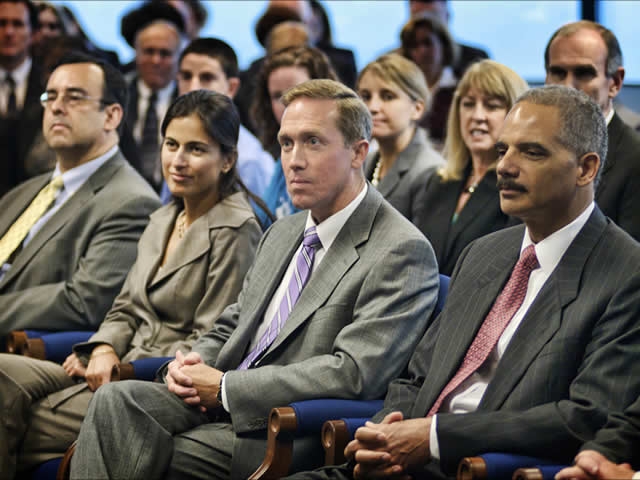
Color photograph by Lonnie Tague for the U.S. Department of Justice, published July 1, 2009. The Attorney General and staff listen during an EOIR chief immigration judge investiture. This official DOJ photograph illustrates federal immigration adjudication; it does not depict the respondent, the BIA panel, Guinea, or the decision reported here. Original DOJ photo gallery ↗
Electronic service did not produce automatic dismissal
DHS electronically served its appeal through EOIR’s Courts & Appeals System on an unrepresented respondent. Assuming that mail should have been used, the Board denied the respondent’s request for summary dismissal because he had notice of the appeal and an opportunity to obtain and answer it. The holding turns on the Board’s conclusion that he did not show prejudice.
The open record had a limited purpose
The immigration judge kept the record open after the merits hearing only for updated criminal records. The later submissions instead included country reports, call logs, affidavits, and employment records. The Board said the judge could decline to consider material outside the specified purpose and again found no demonstrated prejudice from the exclusion.
The expert-witness dispute did not change the result
The Board said expert testimony is evidence that an immigration judge weighs with the rest of the record. Even assuming the judge should have recognized more areas of expertise, the decision found no showing that the limitation materially affected the outcome.
The Board vacated CAT deferral in this case
The immigration judge had granted deferral of removal based on a projected risk of torture connected to the respondent’s asserted sexual orientation. The Board reversed the relevant credibility finding, found insufficient corroboration, sustained DHS’s appeal, vacated CAT deferral, and ordered removal to Guinea. This is the Board’s finding on this record; it is not a factual finding about other LGBTQ people, other Guinean applicants, or CAT claims generally.
Primary federal sources
Corrections: No corrections have been made. Later Attorney General action or judicial review will be labeled and verified against a new federal record.